
Why the Barber Pole Is Red, White, and Blue — And What It Takes to Earn One Today
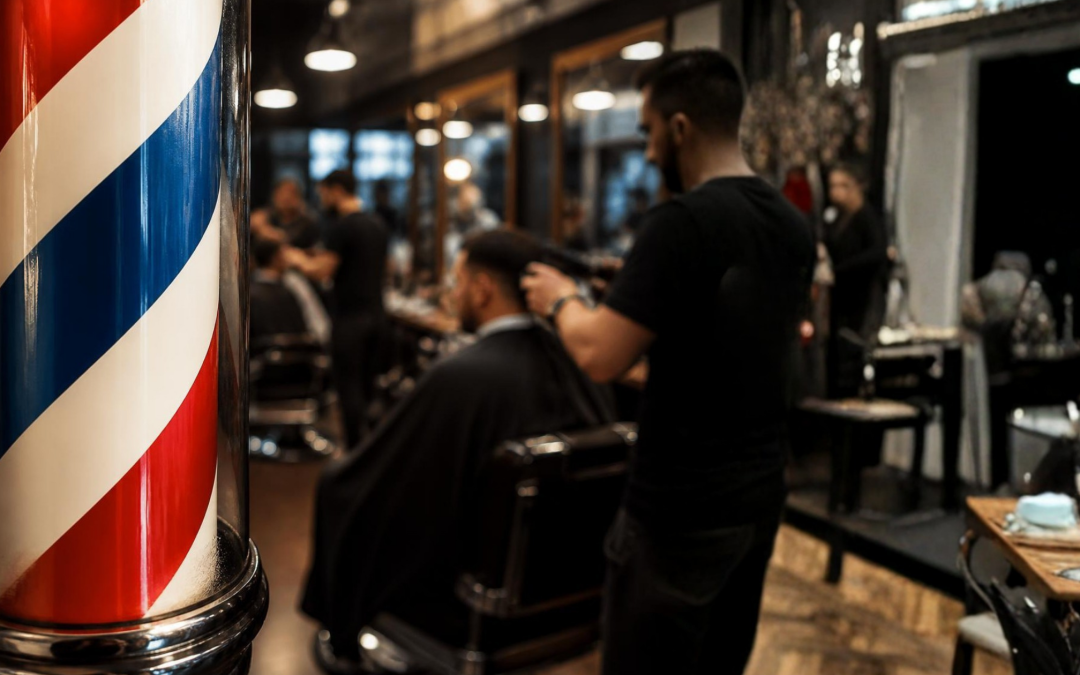
The red, white, and blue pole outside a barbershop looks cheerful and almost hypnotic as it spins. Most people walk past without thinking about it. Yet its original message was far from cozy. The red signaled blood. The white meant bandages. The pole itself stood for the wooden rod that patients gripped during surgery. That history sits behind every barber license Tennessee awards today.
In medieval streets, the same striped pole meant something urgent. A barber’s shop promised haircuts and shaves, but also tooth pulling, wound care, and bloodletting. People trusted the stripes to signal help long before licensing boards existed.
What the Barber Pole Actually Meant: A History More Specific Than Most People Know
The classic barber pole did not start as decoration. It began as a working tool in a world where barbers and surgeons were the same person. In medieval Europe, barber-surgeons offered haircuts alongside bloodletting, tooth extractions, wound dressing, and minor surgery. They operated in crowded towns where illness, injury, and infection were everyday realities.
Bloodletting was a common treatment for everything from fevers to serious disease. Patients would sit beside the barber, grip a wooden rod, and tense their arm so veins bulged for the procedure. That rod is the original pole. Specifically, it kept the arm steady while the barber opened a vein and let blood drain into a waiting bowl.
In 1163, Pope Alexander III ordered monks and priests to stop performing bloodletting. The Church decided this kind of hands-on cutting was no longer appropriate for religious leaders. Consequently, barbers, already skilled with blades, stepped in and expanded from hair and beard work into full barber-surgery.
Where the Spiral Came From
After each procedure, the barber wrapped the wound in fresh bandages and hung the used, bloody ones outside on a pole to dry. As the wind twisted them around the staff, they formed a spiral of red on white. Over time, that practical display became a permanent painted pattern. The red represented blood. The white stood for clean bandages. Additionally, the brass ball at the top symbolized the bowl used to catch blood during the procedure.
Medieval advertising was not subtle. In London, barbers sometimes placed actual bowls of customers’ blood in shop windows to prove their skill. Eventually, horrified complaints pushed authorities to ban the practice. The striped pole survived as the more acceptable sign.
In 1540, a London statute required barbers and surgeons to formally distinguish their services using different pole colors. Barbers used blue and white poles. Surgeons used red and white. By the mid-1500s, English barbers were banned from surgical treatments entirely, though tooth extraction continued briefly. Ambroise Paré, widely considered the father of modern surgery, began his career as a barber-surgeon before helping separate medicine from the barbershop permanently. As History.com’s account of the barber pole documents, European poles stayed red and white. Furthermore, when the tradition crossed to America, blue was added, either to represent veins or as a patriotic nod to the flag.
From Barber-Surgeon to Licensed Professional: How the Barber License Tennessee Recognizes Developed
Over the centuries, medicine professionalized. Scientific methods replaced superstition. By the 19th century, surgery and barbering had fully separated. Barbers no longer drained blood. Instead, they cut hair, shaved faces, and focused entirely on grooming. Yet they still used sharp tools next to skin, so public trust remained essential.
As cities grew, the barbershop became a cultural landmark. People came for the haircut and stayed for the conversation. The chair became a neighborhood meeting place where stories, news, and debates flowed alongside lather and clippers. Consequently, craft and community developed together under the familiar striped pole.
Because barbers work closely with skin, hair, and razors, states began to regulate the trade. Sanitation rules, infection control, and safety practices moved from good ideas to legal requirements. Today, the barber license Tennessee issues through its state board serves the same purpose the old pole once did. It proves that the person holding the clippers has studied sanitation, skin health, and state law, and passed standardized exams to demonstrate it.
How to Get a Barber License in Tennessee Today
The path to a barber license in Tennessee has four clear steps.
Step one: Complete 1,500 hours of training at a Tennessee Board-approved barber school. The curriculum covers haircutting and styling, fade technique, shaving and beard work, skin care basics, sanitation and infection control, client consultation, and state board preparation throughout.
Step two: Pass the PSI written theory exam. This covers barbering knowledge, safety, sanitation, and Tennessee state law. Additionally, the Master Barber program at Genesis Career Colleges builds exam preparation into the curriculum throughout rather than adding it only at the end.
Step three: Pass the PSI practical skills exam. You demonstrate specific services on a live model and a mannequin under timed conditions. Both exams require a score of at least 70 percent to qualify for licensure.
Step four: Apply for your Tennessee Master Barber license. After passing both exams, the credential is yours permanently. It travels with you wherever your career goes.
Where to Train for Your Barber License in Tennessee and Georgia
Genesis Career Colleges offers the Master Barber program at two campuses positioned in two of the Southeast’s strongest barbershop markets.
The Nashville campus serves Davidson County and surrounding areas. Nashville’s music, entertainment, and hospitality sectors keep barbershops consistently active. Moreover, the city’s growing population brings a wide range of clients and styles, putting students in the same market where they are most likely to build their careers.
The Tucker campus serves the Atlanta metropolitan area. Atlanta carries one of the deepest barbershop traditions in the Southeast, from intricate designs to carefully shaped beards. Furthermore, the market is large, culturally rich, and consistently active for skilled barbers at every career stage.
After graduation, Genesis Career Colleges’ career services team supports students with resume help, interview preparation, and employer connections in both markets.
Ready to Earn Your Barber License?
The history behind the barber pole is more interesting than the symbol itself. The credential you earn today carries that tradition forward in the form of a craft worth taking seriously.
Financial aid is available for eligible students at both campuses. Start the federal aid process at studentaid.gov before your first admissions conversation.
- Learn about the Master Barber program at Genesis Career Colleges
- Schedule a campus tour at Nashville or Tucker to see the training environment in person
- Apply now when you are ready to move forward
Nashville campus: 520 Royal Parkway, Suite 250, Nashville, TN 37214 | (615) 242-6811 Tucker campus: 1927 Lakeside Parkway, Tucker, GA 30084 | (404) 499-1777
Genesis Career Colleges | Nashville, TN and Tucker, GA Campuses Authorized for operation as a postsecondary educational institution by the Tennessee Higher Education Commission.